
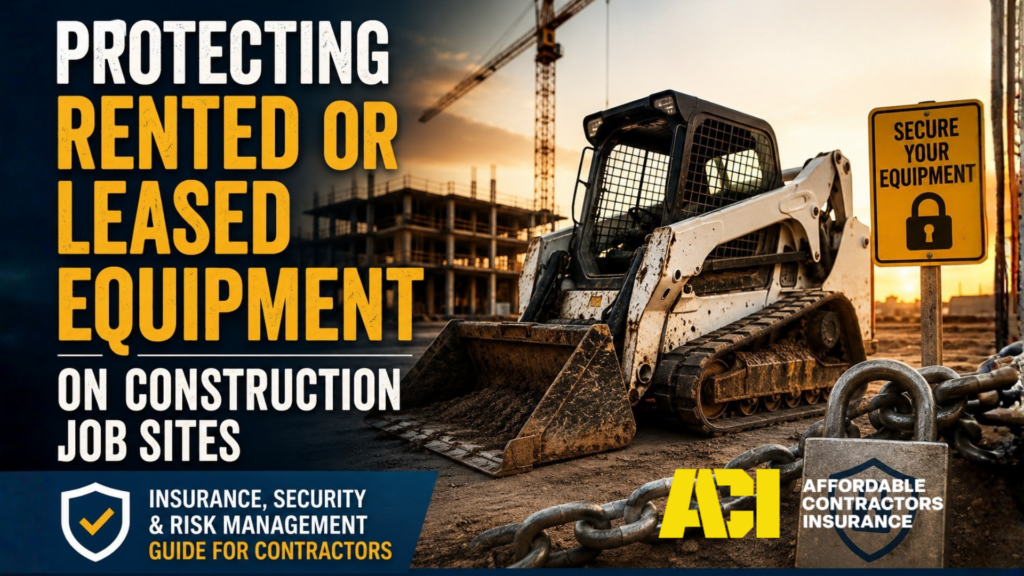
Construction projects rely heavily on equipment. From skid steers and excavators to lifts, generators, compressors, and specialized tools, contractors often depend on rented or leased equipment to keep projects moving efficiently and profitably. Renting equipment provides flexibility and helps avoid large upfront capital expenditures, but it also introduces risks that many contractors underestimate.
One of the biggest misconceptions in the construction industry is that equipment owned by a rental company is automatically their responsibility if something goes wrong. In reality, most rental agreements place significant responsibility on the contractor while the equipment is in their possession. If equipment is stolen, vandalized, damaged, or improperly secured, the financial burden can often fall directly on the contractor.
At Affordable Contractors Insurance (ACI), we frequently speak with contractors who are surprised to learn how much liability they assume when renting equipment. Understanding these risks—and taking steps to manage them—can help protect your business, reduce costly disruptions, and avoid unexpected financial losses.
Why Equipment Theft Remains a Growing Problem
Construction equipment theft continues to be a major issue across the United States. Job sites are often temporary, spread across large areas, and frequently left unattended during evenings, weekends, and holidays. These conditions create opportunities for thieves looking to target valuable equipment that can be sold quickly on secondary markets.
Unlike personal vehicles, many pieces of construction equipment do not have standard registration systems that make ownership easy to verify. As a result, stolen equipment can disappear quickly and become extremely difficult to recover.
The problem extends beyond the replacement cost of the equipment itself. When a critical machine goes missing, projects can come to a standstill. Crews may be unable to perform scheduled work, deadlines can be missed, and contractors may face liquidated damages or strained client relationships. In many cases, the indirect costs of theft exceed the value of the equipment itself.
Understanding Your Responsibilities Under Rental Agreements
Before signing a rental contract, contractors should carefully review the terms and conditions regarding loss, theft, and damage.
Many rental agreements specify that the contractor assumes responsibility for the equipment from the moment it is delivered until it is returned and accepted by the rental company. This responsibility often includes theft, vandalism, weather-related damage, operator negligence, and transportation-related incidents.
Unfortunately, many contractors focus on rental rates and project timelines while overlooking these contractual obligations. A thorough understanding of the agreement can help avoid surprises if a loss occurs.
Questions worth asking include:
- Who is responsible if the equipment is stolen?
- What insurance requirements are specified in the contract?
- Are there deductibles or exclusions?
- Is operator damage covered?
- What documentation is required after a loss?
- Are there specific security requirements that must be followed?
Knowing these details before equipment arrives on-site can prevent significant disputes later.
Creating a Security-First Job Site
The most effective theft prevention strategy begins long before equipment is delivered.
Contractors should evaluate security as part of their project planning process rather than treating it as an afterthought. Job sites that appear organized, monitored, and controlled are far less attractive to potential thieves.
Perimeter fencing remains one of the simplest and most effective deterrents. Clearly marked boundaries make unauthorized access more difficult and signal that the site is actively managed. Access points should be limited whenever possible, and gates should remain locked outside of working hours.
Lighting also plays a critical role. Criminals generally prefer environments where they can work without being observed. Well-lit staging areas, storage yards, and equipment parking locations reduce opportunities for concealment and increase the likelihood of detection.
Visible security measures often deter theft before it happens. Cameras, signage, fencing, and controlled access points create the perception that the risk of being caught is too high to justify the attempt.
The Role of Technology in Equipment Protection
Modern technology has dramatically improved contractors’ ability to monitor and protect valuable equipment.
GPS tracking systems have become increasingly affordable and effective. Many systems provide real-time location tracking, movement alerts, geofencing capabilities, and theft recovery assistance.
Geofencing allows contractors to establish virtual boundaries around a job site. If equipment leaves the designated area during unauthorized hours, immediate notifications can be sent to managers or security personnel.
Some equipment manufacturers now offer integrated telematics systems that monitor location, usage patterns, maintenance needs, and operational status. These systems not only help prevent theft but also improve equipment management and utilization.
While technology should never replace physical security measures, it can provide an important additional layer of protection.
Employee Accountability and Equipment Management
Even the most sophisticated security systems can be undermined by poor internal controls.
Contractors should establish clear procedures for equipment usage, storage, and accountability. Every employee who operates rented or leased equipment should understand company expectations and security protocols.
Daily equipment inspections can help identify damage, unauthorized use, or maintenance concerns before they become larger problems. Maintaining accurate records of who used specific equipment and when can improve accountability throughout the organization.
Many successful contractors implement sign-in and sign-out procedures for both equipment and keys. These systems create a documented chain of custody and help ensure equipment remains under supervision.
Regular training sessions can also improve awareness of theft prevention practices and reinforce the importance of protecting company assets.
Common Insurance Gaps Contractors Overlook
One of the most significant risks associated with rented equipment is assuming that existing insurance policies automatically provide adequate protection.
Unfortunately, coverage can vary substantially between policies.
Many contractors carry general liability insurance and assume it will respond to equipment losses. However, general liability policies typically do not cover theft or physical damage to rented equipment.
Depending on your operation, coverage may need to come from specialized policies such as:
- Inland Marine Insurance
- Contractors Equipment Coverage
- Installation Floater Coverage
- Leased and Rented Equipment Endorsements
- Commercial Property Insurance
Each policy serves a different purpose, and coverage limitations may vary significantly between carriers.
This is why contractors should periodically review their insurance program to ensure coverage aligns with current operations and equipment usage.
The Financial Impact of a Single Equipment Loss
Many contractors focus exclusively on the replacement value of stolen equipment. However, the true cost of a loss is often much higher.
A stolen excavator, for example, may delay excavation work for days or weeks while a replacement is sourced. During that time, labor costs continue, subcontractors may need to reschedule work, and project timelines can slip.
Additional costs may include:
- Rental replacement fees
- Emergency equipment procurement
- Transportation expenses
- Project delays
- Contract penalties
- Lost productivity
- Increased insurance costs
When viewed from this perspective, investing in security measures and appropriate insurance coverage becomes a much easier business decision.
Building a Comprehensive Risk Management Strategy
The most successful contractors view equipment protection as part of a larger risk management strategy rather than a standalone security issue.
An effective approach combines physical security, employee accountability, technology, documented procedures, and insurance protection. Each layer reduces exposure and helps protect the business from potentially significant losses.
No single solution can eliminate risk entirely. However, a comprehensive strategy can dramatically reduce both the likelihood and severity of equipment-related losses.
Protect Your Business Before a Loss Occurs
Many contractors only review their insurance coverage after experiencing a theft, claim, or contractual dispute. By then, opportunities to address coverage gaps may have already passed.
ACI specializes in helping contractors understand their risks and build insurance programs that align with their operations. Whether you’re renting equipment occasionally or relying on leased machinery every day, it’s important to understand how your current policies respond to potential losses.
Request a Free Contractors Insurance Review
Not sure whether your current coverage properly protects rented or leased equipment?
Our team can review your existing insurance program, identify potential coverage gaps, and help ensure your business is protected against the real-world risks contractors face every day.
There is no obligation, no commitment, and no pressure—just practical guidance from specialists who work exclusively with contractors.
👉 Request Your Free Policy Review Today
Final Thoughts
Rented and leased equipment helps contractors complete projects efficiently, but it also creates significant responsibility. Theft, vandalism, accidental damage, and contractual liability can expose businesses to substantial financial losses if proper safeguards are not in place.
By combining strong job site security, modern technology, employee accountability, and the right insurance coverage, contractors can better protect their equipment, their projects, and their bottom line.
Taking the time to evaluate your risks today can save your business thousands of dollars—and countless headaches—tomorrow.