
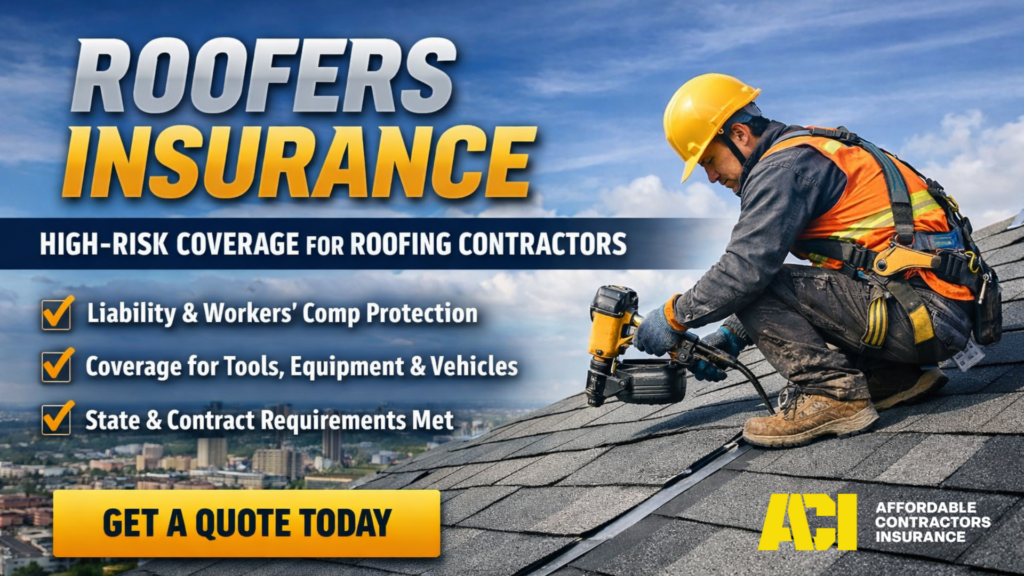
Roofing is one of the most hazardous trades in construction, and your insurance needs should reflect that reality. A dropped bundle of shingles, a ladder-related injury, damage to a client’s property, or a subcontractor issue can turn into a serious financial problem fast. For roofing contractors, insurance is not just a box to check. It is part of how you protect your business, stay compliant, win better jobs, and keep operations moving when something goes wrong.
A lot of roofers assume a basic general liability policy is enough. In most cases, it is not. Roofing businesses often need multiple layers of protection working together, especially if they have employees, company vehicles, expensive tools, subcontractors, or larger contract requirements. The right insurance program helps protect your company from lawsuits, medical costs, jobsite incidents, equipment losses, and contract-related setbacks before they create expensive disruptions.
If your roofing business is growing, bidding larger jobs, or trying to clean up gaps in your current coverage, this is where the details start to matter.
Why Roofers Need Specialized Insurance
Roofing is considered a high-risk trade for a reason. Crews work at elevation, materials are handled in dangerous conditions, and even a small mistake can lead to major injury or property damage. On top of that, many roofing contractors are dealing with strict jobsite requirements, certificates of insurance, subcontractor exposure, and vehicle use every day.
That is why roofers usually need more than one type of policy. A proper insurance setup is designed to respond to the real risks of the trade, not just provide the lowest possible premium. Cheap coverage that leaves gaps can become expensive very quickly when a claim happens.
For many roofing businesses, the goal is not simply to “have insurance.” The goal is to have the right insurance structure in place so one incident does not damage the entire business.
Common exposures roofing contractors face include:
- Falls and worker injuries
- Property damage during active projects
- Subcontractor-related liability
- Vehicle accidents tied to operations
- Theft or loss of tools and materials
If you are reviewing your current policy and want to see whether your roofing business is properly protected,
The Core Insurance Policies Roofing Contractors Usually Need
General Liability Insurance
General liability insurance is one of the most important coverages for a roofing contractor. It is designed to help protect your business if a third party is injured or if someone else’s property is damaged because of your operations.
For example, if debris from a roofing project damages a vehicle, if materials fall and injure someone, or if your work leads to a property damage claim, general liability is often the first line of defense. Many roofing contractors carry limits such as $1 million per occurrence, but exact requirements often depend on the type of work they do and the contracts they sign.
This policy is also critical from a business development standpoint. Many clients, property owners, and general contractors will not even consider hiring a roofer who cannot provide proof of liability insurance.
General liability typically helps cover:
- Third-party bodily injury claims
- Property damage caused by your work
- Legal defense costs tied to covered claims
Workers’ Compensation Insurance
If you have employees, workers’ compensation is one of the most important parts of your insurance program. In most states, it is required. More importantly, in a trade like roofing, it helps protect both your workers and your business when jobsite injuries happen.
Workers’ compensation can help cover medical treatment, lost wages, and other expenses related to work-related injuries. In a field where slips, falls, lifting injuries, and equipment-related incidents are all real risks, this coverage is not optional from a practical standpoint.
Without it, one serious claim can put enormous pressure on cash flow and create legal exposure that many small contractors are not prepared to handle.
Workers’ comp is designed to support:
- Medical expenses from workplace injuries
- Wage replacement during recovery
- Employer protection from injury-related lawsuits
Commercial Auto Insurance
If your business uses trucks, vans, or other vehicles for operations, commercial auto insurance matters. Personal auto policies are generally not built to cover business-related vehicle use the way roofing operations require.
Commercial auto insurance can help cover accidents, vehicle damage, property damage, and liability related to business driving. For roofers transporting ladders, materials, dump trailers, tools, and employees, that exposure is constant.
Whether you have one truck or a growing fleet, your vehicle coverage should match how your business actually operates in the field.
Commercial auto typically includes protection for:
- At-fault accidents and liability claims
- Vehicle damage and repairs
- Theft and vandalism
- Employee drivers operating company vehicles
Tools and Equipment Coverage
Roofing businesses rely on expensive tools and equipment to keep jobs moving. Nail guns, compressors, generators, ladders, safety equipment, and specialized roofing tools are expensive to replace, and theft or damage can interrupt work immediately.
Tools and equipment coverage helps protect those items if they are stolen, damaged, or lost under covered circumstances. For many contractors, this is one of the most overlooked areas until something disappears from a truck bed or jobsite.
Replacing essential equipment out of pocket can hit hard, especially when multiple items are involved at once.
This coverage helps protect:
- Jobsite tools and machinery
- Equipment stored in vehicles
- High-value items used daily in operations
Inland Marine Insurance
Despite the name, inland marine insurance has nothing to do with boats for most contractors. For roofers, it is often the coverage that helps protect materials, tools, and equipment while they are in transit or temporarily stored off-site.
That matters because roofing materials and equipment do not just sit in one office or warehouse. They move between suppliers, trucks, yards, and active jobsites. A standard property policy may not fully protect those items once they leave your primary location.
If your operation regularly moves materials and equipment from place to place, inland marine coverage is worth a closer look.
Inland marine is especially useful for:
- Materials in transit between locations
- Equipment stored temporarily off-site
- Tools moving between multiple job sites
Additional Coverage Roofers May Need
Depending on how your business is structured, there may be other policies worth considering.
Providing design input, consulting, or recommendations can introduce exposure to professional disputes, making professional liability worth evaluating. Larger contracts often come with requirements such as surety bonds, while operations that rely heavily on subcontractors should ensure those subcontractors are properly insured and documented within the overall risk strategy.
The right setup depends on the size of your company, your payroll, your claims history, the states you work in, and the kind of projects you take on.
That is why roofing insurance should be reviewed as a business decision, not just a transaction.
Why Bundling Coverage Can Make Sense
Many roofing contractors benefit from bundling key policies together. That can include general liability, workers’ compensation, commercial auto, and equipment-related coverage. In some cases, bundling can create cost efficiencies. More importantly, it can make policy management easier and reduce the chances of coverage gaps between separate policies.
A bundled setup can also make it easier to keep certificates, renewals, and compliance documentation organized, especially for roofing companies juggling multiple projects and contract requirements.
Bundling can help:
- Reduce administrative complexity
- Improve cost efficiency across policies
- Minimize coverage gaps between providers
The lowest premium is not always the best deal. What matters more is whether the full insurance structure makes sense for how your company actually operates.
What Impacts the Cost of Roofing Insurance
Roofing insurance costs can vary significantly from one business to another. Premiums are usually influenced by your payroll, number of employees, claims history, revenue, type of roofing work, vehicle usage, coverage limits, and where your business operates.
A smaller residential roofer may see very different pricing than a company handling larger commercial or high-elevation work. The more hazardous the operation, the more closely underwriters will look at the business.
That does not mean roofers should chase the cheapest option. It means they should make sure the policy is built around the risk. A lower premium is not much help if the coverage fails when you actually need it.
Key cost drivers include:
- Payroll and workforce size
- Claims history and prior losses
- Type of projects (residential vs commercial)
- Coverage limits and policy structure
State Requirements and Contract Requirements Matter
Roofing contractors often have to meet more than one standard at once. There are state-level insurance requirements, licensing rules, and then there are contract-specific requirements from clients, property managers, or general contractors.
You may need certain liability limits, workers’ compensation documentation, additional insured endorsements, waiver of subrogation language, or other policy features depending on the jobs you are pursuing.
This is where many roofing contractors run into trouble. They may technically have insurance, but not the correct structure for the contracts they are signing.
Common Coverage Gaps Roofers Should Watch For
One of the biggest mistakes roofing contractors make is assuming all policies are built the same. They are not. Exclusions and limitations matter.
Some policies may not respond the way you expect if uninsured subcontractors are involved. Others may have limitations tied to certain types of work, job classifications, or property-related issues. Coverage around open roof situations, new construction exposures, or material handling can also create misunderstandings if the policy has not been reviewed carefully.
That is why insurance should not be treated as just a certificate. The actual policy language and endorsements matter.
Common gaps include:
- Uninsured or improperly classified subcontractors
- Missing required endorsements
- Misalignment between policy and contract requirements
How to Handle a Roofing Insurance Claim
If something goes wrong, documentation becomes critical. Take photos immediately, record what happened clearly, gather any witness details, and notify your carrier as soon as possible. Delays in reporting or incomplete information can create unnecessary problems in the claims process.
You also want to make sure your records are organized ahead of time. Vehicle details, tool inventories, certificates, payroll records, and subcontractor documentation all become important when a claim or dispute arises.
The smoother your internal documentation is, the easier it usually is to move through a claim without avoidable delays.
How to Choose the Right Insurance Partner for Your Roofing Business
Roofing is not a trade where generic insurance advice works well. You want a partner that understands contractor risk, jobsite exposure, certificates, subcontractor issues, and the real pressure roofing businesses deal with every day.
The right provider should be able to explain your options clearly, identify possible gaps, help you understand contract requirements, and build a policy structure that actually supports the way your business operates.
That matters whether you are a solo roofer, a growing residential contractor, or an established company bidding more demanding projects.
Final Thoughts
Roofing is high-risk work. Your insurance program should be built with that in mind. General liability, workers’ compensation, commercial auto, tools and equipment coverage, and inland marine coverage can all play an important role in protecting your business from the kinds of losses roofing contractors are more likely to face.
The goal is not just to stay compliant. It is to protect your operation, support growth, and avoid the kind of coverage gaps that can cost far more than the policy itself.
If your current insurance feels incomplete, outdated, or too generic for the work you do, it may be time for a closer review.