
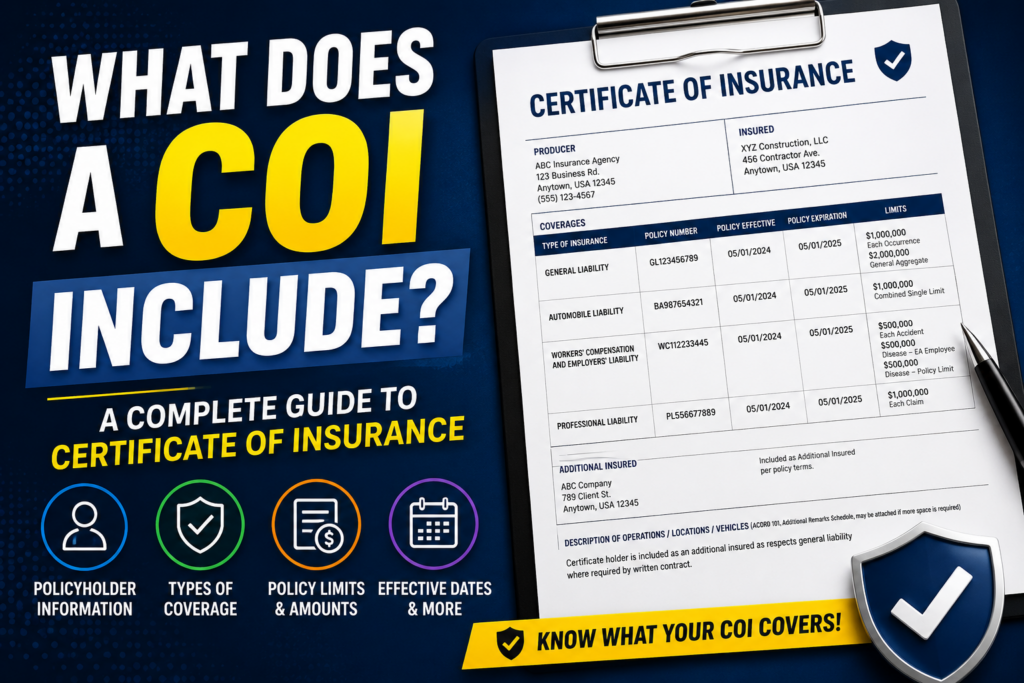
Just like a map guides you through uncharted territory, a Certificate of Insurance (COI) navigates the complex world of insurance coverage. It’s a crucial document that outlines key information about your policy, but what exactly does it contain? Understanding its components can help you ensure you’re adequately protected against liabilities. Let’s explore the essential elements that make up a COI and why they matter.
Definition of a Certificate of Insurance (COI)
A Certificate of Insurance (COI) acts as your proof of an active insurance policy, laying out essential details like coverage types, policy limits, and effective dates.
This one-page document is crucial for understanding your financial protection. It includes your name, the insurance company, and the specific types of coverage you have, such as general liability and workers’ compensation.
You’ll also find the maximum payment amounts for various coverage types, ensuring you know your policy limits. Plus, the COI specifies effective and expiration dates, confirming when your coverage is valid.
If there are additional insured parties, they’ll be listed too, which is vital for contract compliance. Having a COI connects you to a network of protection and assurance.
Purpose of a COI
Why is a Certificate of Insurance (COI) so essential in business dealings? A COI serves as proof of an active business insurance policy, reassuring clients and landlords that you’re covered against potential liability risks.
This document includes crucial details like the policyholder’s name, types of coverage, and coverage limits, fostering transparency in your transactions. By providing a COI, you establish trust and credibility with your clients, which is vital for landing contracts and nurturing professional relationships.
It also protects all parties involved by documenting insurance coverage, helping to minimize disputes and financial risks linked to liability claims. In a world where trust is key, a COI is your ticket to belonging in the business community.
Key Components of a COI
Essential details make up a Certificate of Insurance (COI), ensuring all parties involved understand the coverage provided. A well-structured COI includes key components that clarify the scope of insurance protection.
| Component | Description |
| Policyholder Details | Name and mailing address of the insured party. |
| Coverage Details | Types of policies like general liability and limits. |
| Effective & Expiration | Dates specifying when coverage starts and ends. |
Additionally, the COI contains the policy number for easy reference and identifies any additional insureds, highlighting their rights. By knowing these components, you can foster trust and transparency in your business relationships.
Policyholder Information
Understanding the policyholder information on a Certificate of Insurance (COI) is vital for verifying coverage. The COI prominently displays the policyholder’s name, ensuring you know who’s covered under the insurance.
You’ll also find their mailing address, which serves as a point of contact and confirms the geographical location tied to the insurance coverage. The specific types of insurance coverage—like general liability or workers’ compensation—are clearly outlined, making it easy to grasp what’s included.
Don’t forget to check the effective dates, as they indicate when the coverage starts and ends. If there are any additional insured parties, they’ll be listed too, providing you with a full picture of who else is protected under the policyholder’s insurance coverage.
Insurance Provider Details
When reviewing a Certificate of Insurance (COI), it’s important to pay attention to the insurance provider details, as they verify the legitimacy of the coverage.
Here are some key elements you should look for:
- Insurance Company Name: This shows who’s providing the coverage and adds credibility.
- Policy Number: This unique identifier helps you reference and verify specific coverage details.
- Contact Information: You’ll find the insurance agent or broker’s details, making it easy to ask questions or raise concerns.
- Insurance Provider Logo: This visual element helps confirm authenticity and trustworthiness.
Types of Coverage Listed
After reviewing the insurance provider details, the next step is to examine the types of coverage listed on the Certificate of Insurance (COI). Understanding these types is crucial for ensuring you’re adequately protected.
Here’s a quick overview of common coverage types found in insurance certificates:
| Coverage Type | Description |
| General Liability | Protects against third-party claims. |
| Workers’ Compensation | Covers employee injuries on the job. |
| Auto Liability | Covers damages from vehicle incidents. |
| Professional Liability | Protects against claims of negligence. |
Each type of coverage specifies effective dates and may even include additional insured parties. By knowing your policy coverage, you can confidently navigate potential risks in your projects.
Policy Limits and Coverage Amounts
When reviewing a Certificate of Insurance (COI), you need to pay close attention to the policy limits and coverage amounts.
These details specify the maximum payment limits for various types of coverage and any additional insured details that might affect your protection.
Understanding these aspects is essential for assessing whether you have adequate coverage for potential risks.
Coverage Types Breakdown
Understanding the coverage types included in a Certificate of Insurance (COI) is essential for your peace of mind and financial protection.
When reviewing these coverage types, consider the following:
- General Liability: Covers bodily injury and property damage, typically ranging from $1 million to $2 million per occurrence.
- Workers’ Compensation: Protects your employees with coverage for medical expenses and lost wages, varying by state.
- Auto Insurance: Offers protection for vehicles used in your business operations.
- Umbrella Insurance: Provides additional liability coverage beyond standard policy limits, enhancing your overall protection.
Maximum Payment Limits
While navigating the complexities of insurance, it’s crucial to grasp the concept of maximum payment limits, or policy limits, as they define the highest amount an insurer will pay for covered claims.
These limits vary by insurance type, with general liability often ranging from $1 million to $2 million per occurrence. Understanding the distinction between “per occurrence” and “aggregate” limits helps you gauge your financial protection.
Regularly reviewing your policy limits ensures they align with changes in your business and risk exposure. The Certificate of Insurance (COI) provides detailed information on coverage amounts and limits, giving you and your clients clarity on the financial safety net available in case of claims.
Additional Insured Details
A Certificate of Insurance (COI) not only outlines maximum payment limits but also provides important details about additional insured parties.
Understanding these additional insured details is vital for anyone involved. Here’s what you need to know:
- Coverage Amounts: The COI specifies how much coverage is available for additional insureds.
- Policy Limits: These limits indicate the maximum payout for liability claims.
- Claims Handling: It’s essential to know if coverage is per occurrence or aggregate, as this affects how claims are processed.
- Relationships Defined: The COI clarifies the protection between the primary insured and additional insureds.
Being informed about these aspects ensures you’re covered and helps manage risks effectively in your operations.
Effective and Expiration Dates
When you review a Certificate of Insurance (COI), pay close attention to the effective and expiration dates, as they determine the coverage timeline. The effective date shows when your insurance coverage begins, while the expiration date tells you when it ends. These dates are crucial in any contractual agreement, ensuring you’re protected throughout your engagement with a contractor or business.
| Effective Date | Expiration Date | Importance |
| Start Date | End Date | Confirms coverage start/end |
| Policy Renewal | Renewal Date | Updates coverage information |
| Contract Dates | Engagement Period | Aligns with project timeline |
Always obtain an updated COI when policies change to avoid liability risks.
Additional Insured Status
When you add someone as an Additional Insured on a Certificate of Insurance (COI), you extend your liability coverage to protect them from claims related to your operations.
This status is especially beneficial for clients or partners who want to minimize their risk in contracts.
Understanding the specifics of Additional Insured status can help you navigate insurance requirements more effectively.
Definition of Additional Insured
Additional insured status is a crucial aspect of liability insurance that extends coverage to another party, ensuring they’re protected under the primary insured’s policy. This status is vital for clients and property owners who want to safeguard their interests.
Here’s what it typically entails:
- Liability Coverage: It provides protection against claims related to the primary insured’s actions.
- Documentation: Inclusion in an insurance policy must be detailed in a Certificate of Insurance (COI).
- Risk Mitigation: It helps clients reduce their financial liability in case of lawsuits.
- Limitations: Additional insureds may not receive the same level of protection as the primary insured, so understanding the scope is key.
Being informed about additional insured status fosters a sense of security and belonging.
Benefits of Additional Insured
While securing Additional Insured status might seem like just another checkbox in a contract, it actually offers significant benefits that can protect your interests. By including clients as Additional Insured on a Certificate of Insurance (COI), you extend crucial liability coverage, ensuring they’re shielded from claims related to your work.
This not only fosters trust but also enhances your business relationships, as clients feel more secure knowing they’re protected. Moreover, having this status can be a vital aspect of contractual agreements, facilitating smoother project approvals.
Ultimately, obtaining Additional Insured status helps clients avoid potential financial losses from claims that might arise due to your activities, creating a more collaborative environment for everyone involved.
Notification Requirements
Notification requirements are a crucial aspect of a Certificate of Insurance (COI), as they outline the obligations of the insurance company to inform you about any changes to coverage or cancellations.
Understanding these requirements helps maintain transparency and protects your interests as a certificate holder. Here are some key points to keep in mind:
- The insurance company must notify you of any policy cancellations or modifications.
- Standard notification periods for cancellations are typically set at 30 days.
- You, as the certificate holder, should receive written notice regarding any changes.
- The COI clearly identifies your name and relationship to the insured, reinforcing your rights.
Endorsements and Special Conditions
When reviewing your Certificate of Insurance (COI), pay close attention to endorsements and special conditions.
These can include additional insured parties, a waiver of subrogation, and primary or non-contributory clauses that shape your coverage.
Understanding these details is crucial for ensuring you meet all your obligations and protect your interests.
Additional Insured Parties
Including additional insured parties on a Certificate of Insurance (COI) is vital for protecting those entities from claims related to your operations. Here’s what you need to consider:
- Coverage Scope: Ensure the COI specifies coverage for both ongoing and completed operations.
- Notification: Notify your insurance company to extend and document coverage for additional insured parties.
- Contractual Agreements: Align the endorsements with your contractual agreements to meet insurance requirements.
- Clear Definitions: Clearly identify which parties are additional insureds to avoid gaps in coverage and confusion during claims.
Waiver of Subrogation
A Waiver of Subrogation serves as a crucial endorsement that protects you from potential liability claims by preventing your insurer from seeking reimbursement from third parties after they’ve paid a claim.
This is especially important in the realm of business liability insurance, where claims of bodily injury can arise unexpectedly. Including a Waiver of Subrogation in your Certificate of Insurance (COI) not only safeguards your interests but also fosters trust between you and your clients, paving the way for stronger business relationships.
Keep in mind that this endorsement may come with specific conditions, detailing the parties involved and applicable claims.
Be prepared for insurance companies to charge an additional premium, given the increased risk they assume by waiving their right to subrogate.
Primary and Non-Contributory
Waiver of Subrogation isn’t the only endorsement that can protect your interests in a Certificate of Insurance (COI).
Understanding “Primary and Non-Contributory” endorsements is essential for managing your liability. Here’s what you need to know:
- Primary Coverage: This means your insurance policy responds first, before any other policies.
- Non-Contributory: The additional insured’s policy won’t contribute to claim payments, minimizing their financial exposure.
- Contractual Importance: These endorsements are vital in contracts where one party assumes liability for certain risks.
- Clarity in Responsibility: Including these endorsements in a COI clarifies each party’s coverage and obligations.
Contact Information for Verification
How can you ensure the authenticity of a Certificate of Insurance (COI)? One of the best ways is to check the contact information included in the document.
This details the issuing insurance company and often lists the insurance agent’s name and phone number. By reaching out directly, you can verify the insurance policy’s validity and confirm coverage details.
It’s essential to ensure the policy is active and meets your specific requirements. This step helps you avoid potential fraud, especially from contractors who might present falsified COIs.
Always take a moment to validate all details, like coverage amounts and effective dates, with the insurance company. Doing so fosters trust and keeps your interests protected.
Importance of Accurate Information
Accurate information on a Certificate of Insurance (COI) is crucial for protecting your interests and ensuring compliance in business transactions.
Here’s why you should pay attention:
- Policyholder’s Name: It must match the requesting entity to avoid discrepancies.
- Coverage Limits: Clearly listed limits help prevent confusion about liability protection.
- Effective Dates: Ensure these dates are accurate to avoid suggesting a lapse in coverage.
- Additional Insured Parties: They must be correctly named to guarantee adequate coverage in case of a claim.
Differences Between Basic and Custom COIs
When you’re deciding between a basic and a custom Certificate of Insurance (COI), it’s crucial to understand their key features and usage scenarios.
A basic COI offers a quick overview of your coverage, while a custom COI meets specific client needs and contractual requirements.
Knowing how to obtain each type efficiently can save you time and ensure compliance.
Key Features Comparison
While both basic and custom Certificates of Insurance (COIs) provide essential coverage details, they serve different purposes and cater to varying needs.
Understanding these differences can help you choose the right COI for your situation:
- Basic COI: Quick and convenient; ideal for small businesses.
- Custom COI: Tailored to client specifications; often required for complex agreements.
- Coverage Limits: Basic COIs summarize essential information, while custom COIs include detailed specifications.
- Proof of Coverage: Basic serves as straightforward proof; custom ensures compliance with specific insurance requirements.
Usage Scenarios Explained
Understanding when to use a Basic or Custom Certificate of Insurance (COI) can make a significant difference in how smoothly your transactions and agreements proceed.
| Type of COI | Key Characteristics | Ideal Usage Scenario |
| Basic COI | Summary document, instant access | General transactions, record-keeping |
| Custom COI | Tailored details, additional insured | Specific contractual agreements |
Basic COIs serve as proof of insurance for simple needs, while custom COIs are designed to meet specific client requirements. If your project demands detailed compliance or has unique insurance stipulations, a custom COI is essential. By choosing the right type, you ensure all parties feel secure and respected in your partnerships.
Obtaining Custom COIs
How can you ensure that your insurance documentation meets specific client requirements? Obtaining custom Certificates of Insurance (COIs) is key. Here’s what you need to know:
- Specific Details: Custom COIs include tailored information, like naming additional insured parties.
- Timeframe: While you can obtain basic COIs instantly online, expect custom COIs to take up to three business days.
- Compliance: They’re often necessary for contractual agreements to meet specific insurance requirements.
- Process: Communicate your requirements clearly with your insurance provider to streamline the process.
How to Request a COI
When should you request a Certificate of Insurance (COI)?
It’s essential to ask for proof of insurance from contractors or businesses before any work begins. This ensures that you’re protected and builds trust in your professional relationships.
To request a COI, reach out directly to your contractor, specifying the needed coverage types and limits, as well as any additional insured parties. Contractors can easily obtain a COI from their insurance company, so don’t hesitate to ask.
Remember to verify the COI’s authenticity by contacting the issuing insurance company. If there are changes in coverage or policy renewals, make sure to request a new COI to keep your documentation current and reliable.
Your peace of mind matters!
Conclusion
In summary, a Certificate of Insurance is more than just a document; it’s your safeguard against liability risks. By understanding its key components and ensuring accuracy, you can avoid potential pitfalls. Coincidentally, when you request a COI, you’re not just ticking a box; you’re building trust with clients and landlords alike. So, take the time to verify that all details are correct, and you’ll find peace of mind in your coverage.